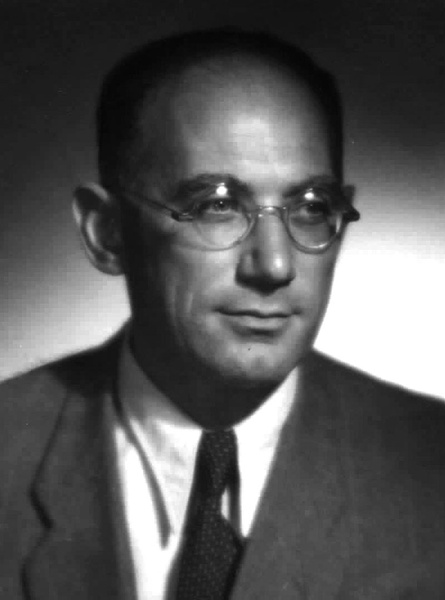


Włodzimierz Ormicki was born in Kraków, then part of the Austro-Hungarian Empire, as the son of a civil servant named Nussbaum. At some point, his Jewish family changed their surname from Nussbaum to Ormicki. From 1915 to 1922, he studied at the Kraków Conservatory and subsequently continued his training as a conductor at the Bavarian Academy of Music in Munich from 1924 to 1926. In 1926, he began his professional career as a répétiteur at the Munich Opera. He then accepted a position at the Städtebundtheater of Solothurn and Biel in Switzerland, where he worked as a répétiteur, music director, and choir director. In 1928, he was invited to serve as an assistant at the Bayreuth Festival. Ormicki also participated in the Salzburg Festival in 1931 and 1932. During the following years, he conducted a variety of orchestras and choirs. In 1936, he was appointed choir director at an operetta theater in Warsaw, and in 1937 he moved to Kraków to lead the city’s symphony orchestra. He remained in that position until the German invasion of Poland in September of 1939.
During the German occupation, Ormicki, like many of Kraków’s Jewish residents, appears to have lived in hiding, probably with forged papers. On August 6, 1944, during a mass arrest carried out by the German occupation authorities, he was interned at the Płaszów concentration camp near Kraków together with more than 6,000 other Polish men. It seems likely that he was not identified as Jewish at the time and was instead treated as a non-Jewish Pole. His brother, Wiktor Ormicki, was less fortunate. Deported to the Sachsenhausen concentration camp in 1939, he was identified as Jewish and murdered on September 17, 1941, at the Mauthausen–Gusen camp complex.
Włodzimierz Ormicki survived the war. Following the liberation of Kraków in March of 1945, he worked with Witold Rowicki to rebuild the Katowice Radio Symphony Orchestra and served there as a conductor until 1948. He subsequently held positions with the Łódź Philharmonic and at the opera houses in Wrocław and Bytom, where he became the company’s artistic director. In 1966 he returned to Katowice as deputy artistic director and conductor. He concluded his career as director of the opera in Bydgoszcz, at the time known by its German name, Bromberg. In addition to his conducting work, Ormicki was active as a composer and translator of librettos and taught at several Polish universities. He died on May 31, 1974, in Bydgoszcz.
1905 Krakow
1974 Bydgoszcz