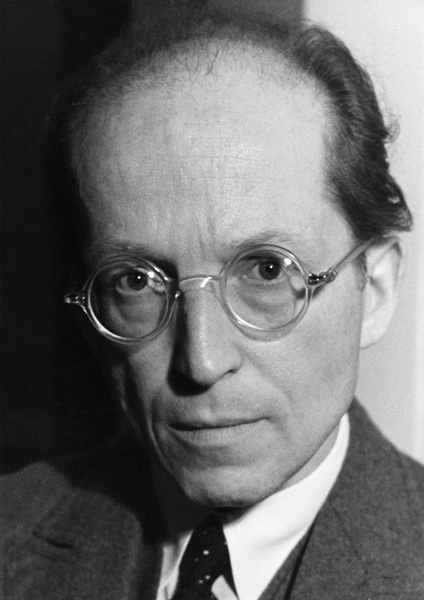


Born on November 13, 1887, in Poznań, Otto Bernstein made his debut at the Schillertheater in Berlin in 1906 before moving to the Hildesheim Stadttheater in 1909. In 1911 he went to the Neues Theater in Frankfurt and in 1914 to the Königliches Schauspielhaus, which later became the Albert-Theater, in Dresden. In 1915 he was engaged at the Leipzig Schauspielhaus, but was subsequently drafted into the military. After the war, Bernstein performed at the Berlin Volksbühne and returned to Dresden in 1921. There, he worked as a director, actor, and reciter at the city’s private theaters: the Albert-Theater in 1921/22, the Neues Theater in 1924/25, the Komödie in 1926/1927, and once again at the Albert-Theater in 1927/28. Lauded as a “brilliant director”, he brought works like Schiller’s Mary Stuart and František Langer’s comedy The Camel through the Needle’s Eye, as well as one-act plays by Arthur Schnitzler, to the stage. Bernstein worked as an acting coach and occasionally performed as a reciter at the Staatsschauspiel.
Since hardly any sources about the Dresden’s private theaters have been preserved, the details of Otto Bernstein’s career between 1928 and 1933 remain uncertain. Because he was Jewish, Bernstein’s career came to an end in 1933, when the Nazis came to power. He and his wife, the actress Jenny Schaffer-Bernstein, who had also been dismissed from the Staatsschauspiel Dresden, left for Berlin, where it was only possible for them to perform in the cultural ghetto of the Jewish Cultural Federation. Between 1933 and 1941, he performed in and staged productions for the Cultural Federation in Berlin, Dresden, Leipzig, Chemnitz, Plauen, and Danzig (present-day Gdańsk). On February 26, 1943, Bernstein and his wife were deported from Berlin to Auschwitz, where they were murdered.
1887 Poznań
1943 Auschwitz (Concentration and Extermination Camp)