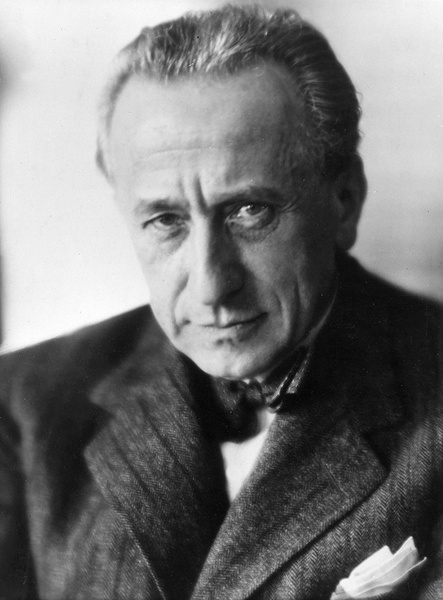
“I am an ardent admirer of his great art, which is unparalleled in its unification of confidence and clarity with elegance and agility.” (Wilhelm Furtwängler on Leo Blech, 1931)
Leo Blech was born on April 22, 1871, in Aachen. After initially training as a merchant, he studied piano and composition at the Academy of Music in Berlin. His career as music director began when his one-act opera Aglaja debuted at the Stadttheater in Aachen in 1893 and the budding composer was appointed second music director. After furthering his composition studies under Engelbert Humperdinck, Blech took a position at the New German Theater in Prague in 1899. In 1906, he received his first contract from the Königliche Hofoper Unter den Linden, where he was appointed Royal Prussian Chief Music Director seven years later. In 1923, he transferred to the opera in Berlin’s Charlottenburg district, only to return to the State Opera after three years, where he was given a ten-year contract in 1928. An internationally renowned conductor and orchestra trainer, Blech was at the height of his career. He became famous for the elegantly written notes of praise or reprimand that he sometimes had sent to the soloists’ dressing rooms after rehearsals and performances.
In spring of 1933, when the Nazi factory cell posted a list of names it had compiled for upcoming purges, Blech’s name was at the top. However, during a conversation with the directors of the State Opera, Heinz Tietjen and Wilhelm Furtwängler, Hermann Göring decided that Blech, “the full-blooded Jew,” would remain in his post “until further notice.” This notice came in 1936: Hans Hinkel, who oversaw matters pertaining to the “Jewish question” at the Ministry of Propaganda, began to exert pressure. One year later, Tietjen announced that Blech and the opera house “mutually agreed” to part ways on April 15, before his contract was due to expire.
Exiled in Latvia, Blech began conducting at the National Theater in Riga. In 1940, he was offered the position of director at the conservatory in Moscow, though he declined the invitation. Facing deportation to the ghetto after German troops occupied Riga on July 1, 1941, he reached out to his former general director for help. Tietjen leveraged his connections and saw that Blech and his wife could emigrate to Sweden under the protection of Hermann Göring. While making a living conducting at the Royal Opera in Stockholm, he was being stripped of his citizenship and assets in Germany. After the war, Blech was the most important witness to come to the defense of Heinz Tietjen during his lengthy denazification proceedings. When Tietjen became the general director of the Deutsche Oper in Berlin-Charlottenburg, he reappointed his exiled employee to the role of chief music director. Leo Blech stayed until 1954. He died on August 25, 1958, in Berlin at the age of 87.
1871 Aachen
1958 Berlin