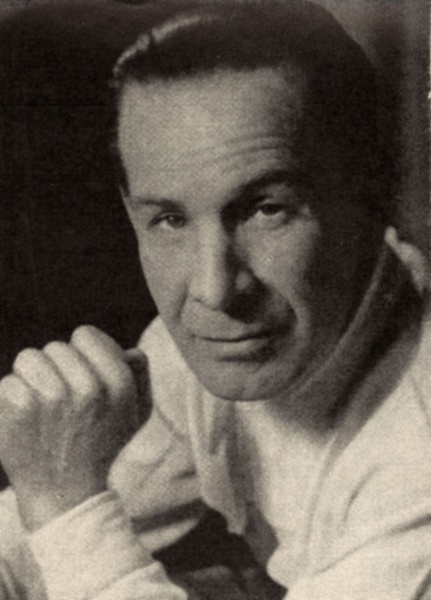


Karl von Appen was born on May 12, 1900, in Düsseldorf. After training as a painter and photographer, he began studying painting in Frankfurt in 1920. At the same time, beginning in 1921, he worked as a set designer at the Frankfurt Künstlertheater. After several years working as both an artist and set designer in Berlin and Dortmund, he moved to Dresden in 1929 as a freelance painter. There he created stage designs for productions such as Hindemith’s Sancta Susanna, Stravinsky’s L'Histoire du soldat, and Milhaud’s Le Pauvre Matelot. In 1930, he began working as a set designer in Würzburg. Because he had been a member of the Communist Party and a communist artists’ association since 1932, Karl von Appen was deemed “politically unacceptable” and banned from his profession in 1933. He survived with the help of friends in the years that followed. In May of 1940, he received a job as an assistant in the painting workshop of the Semperoper. The following year, on June 23, 1941, he was arrested by the Gestapo, convicted as a member of the communist resistance, and imprisoned in the Rollwald penal labor camp. He was liberated there by US troops in 1945. Just a few months later, in October of 1945, he was appointed head of stage design at the Semperoper. From 1947 to 1950, he served as director of the State Theaters. Beginning in 1954, he worked as chief set designer at the Berliner Ensemble and as a guest artist at numerous theaters in both East and West Germany and in London. In 1961, he became a member of the East German Academy of Arts. Karl von Appen died on August 22, 1981, in Berlin.
1900 Dusseldorf
1981 Berlin