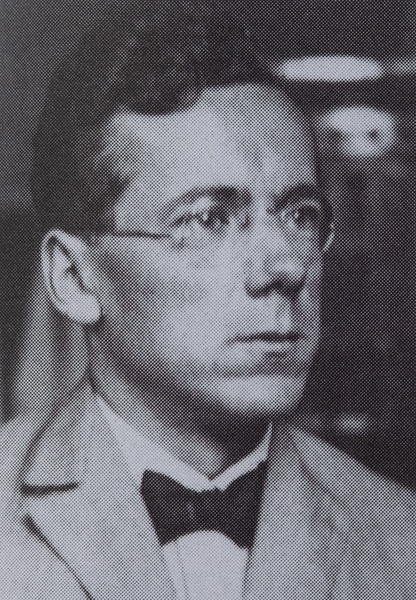


Karl Rankl was born on October 1, 1898, in Gaaden, outside of Vienna. He fought in World War I between 1916 and 1918 before studying composition under Arnold Schönberg and Anton Webern. From 1922 until 1925, he served as répétiteur and choirmaster at the Volksoper in Vienna, stepping into the additional role of conductor in 1924. After appointments as music director in Liberec
and Königsberg, Rankl held a post at the Kroll Opera as choirmaster and assistant to Otto Klemperer. He remained a part of the ensemble there until the opera house’s closure in 1931. He was also active in Berlin’s musical movement for the working class.
Following his dismissal from his post in Berlin, Rankl spent a season at the Prussian State Theater in Wiesbaden as music director. With his employment at the Städtische Oper in Berlin, which was to begin in 1932, falling through due to his association with workers’ music and the Communist Party of Germany, Rankl took up appointments as guest conductor in places like Moscow and Leningrad.
After Hitler was named chancellor on January 30, 1933, Rankl and his wife Adele, born Adele Jeohda to a Jewish family, left Germany that February, seeking refuge with friends in Liberec
, in former Czechoslovakia. In the summer of 1933, the Rankls relocated to Graz, where Karl Rankl served as music director and opera director of the Städtische Bühnen until 1937. He then took up a post at the German Theater in Prague for a season.
With the looming annexation of Czech territory by Germany in September of 1938, Rankl and his wife fled to Switzerland. However, lacking a visa for their planned emigration to the United States, the couple were forced to return to Czechoslovakia just weeks later. It wasn’t until August of 1939, after Czechoslovakia had become a satellite state of the German Reich, that they managed to escape, this time to England. However, because of his German citizenship, British authorities considered the conductor a “enemy alien”, and he was detained for several months in 1940 on the Isle of Man.
The trials and tribulations of the escape, as well as the financial hardship he faced, severely compromised Rankl’s health, making him bedridden for several months. Only after the war was he able to return to his career. He was appointed music director at the Royal Opera House in Covent Garden in 1946 and head of the Scottish National Orchestra in 1952. From 1958 to 1960 he served as music director of the Elizabethean Trust Opera Company in Sydney. Karl Rankl died on September 6, 1968, in Salzburg.
101 Moscow
1968 Salzburg