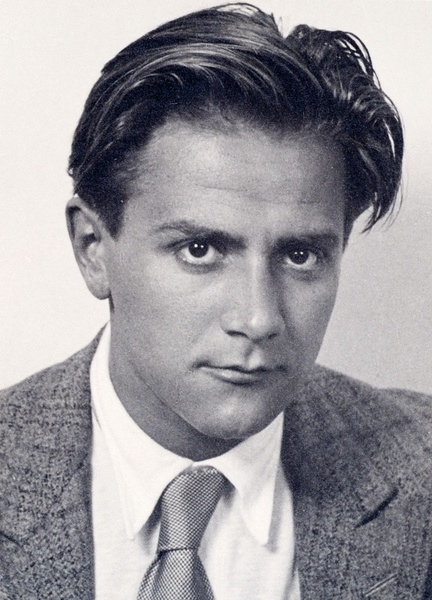
Der Schauspieler wurde am 12. August 1905 in Wien als Sohn eines Instrumentenbauers geboren und wuchs zusammen mit seinem Bruder, der später auch Schauspieler wurde, im proletarischen Milieu der K. u. K. Monarchie auf. Schon als Kind theaterbegeistert, bestand er 1922 die Aufnahmeprüfung an der Wiener Akademie für Musik und darstellende Kunst, spielte seit 1923 als Statist an verschiedenen Bühnen der Stadt und debütierte 1924 am Raimundtheater. 1926 ging Paryla nach Deutschland und spielte zunächst in Mannheim und Köln, 1927/1928 in Darmstadt, 1928/1929 in Düsseldorf sowie von 1929 bis 1931 in Breslau. Im September 1931 kam der junge Schauspieler erneut ans Hessische Landestheater Darmstadt und überzeugte sofort Publikum und Kritiker mit seiner vitalen und leidenschaftlichen Art: als Hauptdarsteller in Drehers Die Reifeprüfung, Shaws Blanco Posnets Erweckung und Hauptmanns Michael Kramer ebenso wie als Melchthal in Wilhelm Tell und Mortimer in Maria Stuart.
Schon in Breslau hatte sich Paryla politisch betätigt und in der kommunistischen Interessengemeinschaft für Arbeiterkultur eine Arbeiterspielgruppe geleitet, die auf KPD-Kundgebungen Agitprop-Stücke zeigte. Auch in Darmstadt verheimlichte er als Mitglied der Revolutionären Gewerkschaftsopposition seine politische Einstellung nicht. Für die Nazis war Paryla deshalb ein politischer Gegner, den es radikal zu bekämpfen galt. Am 16. März 1933 wurde er beurlaubt und gehörte damit zusammen mit seinem Freund Hermann Gallinger zu den ersten Opfern der Säuberungen nach der Entlassung des Intendanten Hartung. Es folgten Hausdurchsuchungen, aber auch eine Geste der Solidarität, die Paryla und Gallinger durch den Schauspielerkollegen Kurt Westermann erfuhren. Paryla kehrte nach Wien zurück und arbeitete bis 1938 am Theater in der Josefstadt. Nach der Annexion Österreichs erneut von der Gestapo verfolgt, emigrierte er im Sommer 1938 nach Zürich und ans Schauspielhaus, an dem neben Gustav Hartung und Kurt Hirschfeld auch Wolfgang Langhoff arbeitete, zu dem sich bald eine enge Freundschaft entwickelte. In den folgenden zehn Jahren spielte er an dem für viele Emigranten zum Fluchtpunkt gewordenen Theater etwa neunzig Rollen, darunter die Uraufführungen von Brechts Mutter Courage, Der Gute Mensch von Sezuan und Galileo Galilei.
Nach dem Krieg kehrte Paryla nach Österreich zurück und gründete 1948 in Wien das Neue Theater in der Scala, das wegen seines revolutionären Selbstverständnisses im beginnenden Kalten Krieg als „Russentheater“ attackiert und 1956 geschlossen wurde. In der Folgezeit drehte Paryla Filme für die DEFA, arbeitete verstärkt am Deutschen Theater in Ost-Berlin und erhielt für seine Inszenierung der Wallenstein-Trilogie den Nationalpreis der DDR. Der Mauerbau und die Verhärtung der Kulturpolitik führten dazu, daß Paryla Ost-Berlin verließ. In den folgenden Jahren arbeitete er als Schauspieler und Regisseur an vielen Bühnen Österreichs, der Schweiz und der Bundesrepublik. 1972 kehrte er für eine Gastinszenierung von Paul Dessaus Die Verurteilung des Lukullus nach Darmstadt zurück. Am 14. Juli 1996 ist Karl Paryla in Wien gestorben.
1905 Wien
1996 Wien