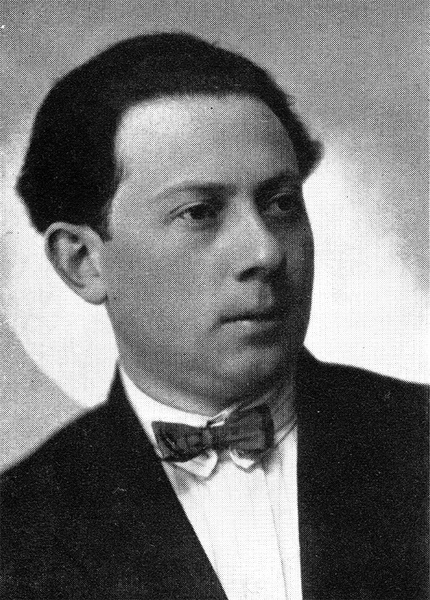


Born to a hotelier in Rzeszów, which belonged to Austria at the time and is now part of Poland, Hermann Horner completed his vocal studies in Belgium. He served as a soldier in the Austro-Hungarian Army during World War I and subsequently began his singing career at the Flemish Opera in Antwerp. Following engagements at theaters in Lemberg (present-day Lviv) and Breslau (present-day Wrocław), he went to Berlin in 1924, where he performed at the State Opera for one season. He sang at the German Theater in Prague from 1925 to 1927 and immediately thereafter at the Nuremberg Opera. After performing at the Bayreuth Festival in 1928, he became an ensemble member of the Stuttgart Opera in 1929.
There, Horner’s diverse repertoire and popularity among audiences quickly made him one of the most important representatives of his register. Only the NS-Kurier, the local Nazi newspaper, was less enthused. A constant critic of Horner’s artistic capabilities since its foundation in 1931, it characterized him as “a hardly convincing Fasolt” who had been “miscast” as Sarastro and lamented that “neither [his] singing nor acting” was adequate for the role of the Duke in Pfitzner’s Das Herz. These attacks were not directed at Horner the artist, but at Horner the Jew: his attempt at “immersing himself in his role” as Hagen, the newspaper wrote, was in vain; his King Mark was unconvincing because “what he was singing was deeply foreign to him”; and, as adept as he was at singing Italian opera, his voice was “too plain, to vapid for Wagner.” All of these remarks were different versions of the widespread anti-Semitic stereotype that Jews were inherently incapable of understanding and bringing to life works of German art.
Like other prominent ensemble members in Stuttgart, so too was Hermann Horner dismissed in late March of 1933, after the Nazis came to power. The course of his life in the years that followed can only be partially reconstructed. He was employed at the theater in Aussig (present-day Ústí nad Labem) in Czechoslovakia from 1933 to 1935 and later returned with his family to his hometown of Rzeszów. After the Germans invaded Poland on September 1, 1939, Jews were initially sent to labor camps. From 1941 on, they were corralled into a ghetto along with tens of thousands of Jews from the surrounding areas. Many of them died from inhumane living conditions, forced labor, and murder at the hands of the German occupiers. Hermann Horner was among those who did not survive persecution. It is unknown whether he died in the Rzeszów Ghetto or was sent to his death at the Belzec extermination camp during the deportation campaigns that commenced in July of 1942. Horner’s family—his wife Khana and their children Eva, Mario, and Ludvik—also perished under unknown circumstances.
1892 Rzeszów
1939 Rzeszów