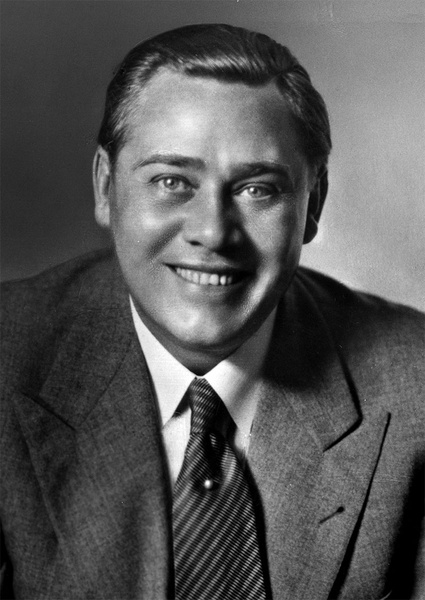


Born on September 22, 1892, in Cologne, Herbert Janssen initially studied law and served as an officer in the First World War. He subsequently trained as a singer in Berlin under the prominent voice teacher Oskar Daniel and made his debut on May 5, 1922, in a performance of Franz Schreker’s Der Schatzgräber at the Berlin State Opera. Janssen remained a member of the State Opera ensemble until 1938, during which time he rose to become an international opera star: from the mid-1920s onward, he appeared on all the major stages of Europe and some beyond, for example in Buenos Aires. The core of his extensive repertoire consisted of lyric roles, first by Verdi and later by Wagner. From 1930 onward, he was also among the recurring stars of the Bayreuth Festival.
The Nazis’ rise to power initially had no consequences for Herbert Janssen. However, he soon came under suspicion of homosexuality—at that time a criminal offense punishable by severe penalties and one that brought him to the attention of the Secret State Police. Although Janssen joined the Nazi Party in March of 1937, he decided shortly thereafter to flee. He first went to the Vienna State Opera and, following the annexation of Austria in March of 1938, emigrated to England. With this, his membership in the Nazi Party was discontinued.
In the course of 1938, Herbert Janssen left England and went to the United States. There, he made his debut at the Philadelphia Opera as the Wanderer in Siegfried and appeared for the first time at the Metropolitan Opera in New York on January 29, 1939. He remained a member of the ensemble until 1952, performing 14 roles in 152 performances before retiring from the stage and working as a voice teacher.
To this day, the singer is regarded as one of the “most important representatives of the baritone repertoire of the interwar period.” Herbert Janssen died on June 3, 1965, in New York.
1892 Cologne
1965 New York