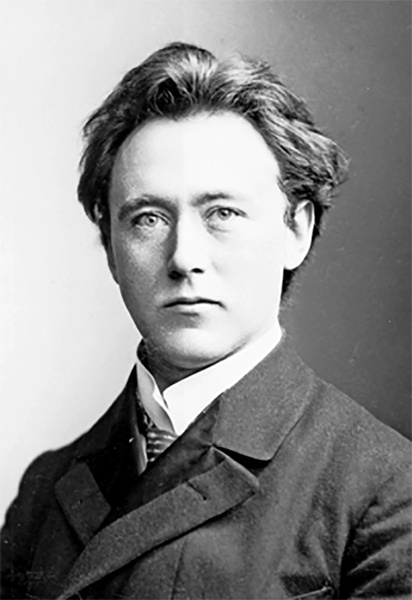


Im damals österreichischen Zara, dem heute kroatischen Zadar geboren, wuchs Felix Weingartner in Graz auf und besuchte dort das Konservatorium. Ab 1881 setzte er seine Ausbildung in Leipzig fort und beendete seine Studien 1886 bei Franz Liszt in Weimar. 1884 begann das Ausnahmetalent seine Dirigentenkarriere als Kapellmeister am Stadttheater Königsberg und kam nach Engagements in Danzig, Hamburg und Mannheim 1891 an die Königliche Oper in Berlin. Von 1898 bis 1907 wurde er musikalischer Leiter des Kaim-Orchesters in München, bevor er von 1908 bis 1910 Nachfolger Gustav Mahlers an der Wiener Hofoper wurde. Von 1914 bis 1919 war er Generalmusikdirektor in Darmstadt, anschließend Direktor der Wiener Volksoper und seit 1927 Leiter des Konservatoriums in Basel. Ab 1934 wirkte er als Direktor der Wiener Staatsoper.
Zu Beginn seiner Karriere war der junge Weingartner 1886 auf Empfehlung des Festspiel-Dirigenten Hermann Levi als musikalischer Assistent nach Bayreuth gekommen und zum gern gesehenen Gast in Wahnfried geworden. Als er aber Zeuge wurde, wie die Wagner-Familie den von ihm verehrten Levi als Juden verhöhnte, kam es zum Streit mit der Festspielchefin Cosima Wagner. Doch nicht nur der in Wahnfried herrschende Antisemitismus wurde zum Problem: Der selbstbewusste junge Kapellmeister ließ die von Cosima geforderte „Unterwürfigkeit“ vermissen und verletzte damit die Gesetze der Bayreuther Orthodoxie. Der Abschied fiel dementsprechend kühl aus – Weingartner wurde nie wieder engagiert. Der „Verrat“ des einstigen Hoffnungsträgers allerdings erfuhr in den folgenden Jahren eine perfide Umdeutung: Weingartner wurde in Wahnfried zum Juden gemacht und damit seine Entfernung aus Bayreuth nachträglich gerechtfertigt. „Meiner Meinung nach ist er Orientale“, schrieb Cosima und präzisierte später, Weingartner sei jüdisch „gemischt“. Dies war falsch, Weingartner war kein Jude. Diese Stigmatisierung aber sollte ihn verfolgen.
Nach der nationalsozialistischen Machtübernahme 1933 berichtete der Dirigent von „kraßen Gerüchte[n] über mich“ und bemerkte: „Seit vielen Jahren geschieht das Möglichste, mich von Deutschland ferne zu halten.“ Man wolle ihn als einen „unbequemen Künstler durch heimliche Mittel […] beiseite schieben“. Er hatte allen Grund zur Besorgnis: Der „Reichsdramaturg“ Rainer Schlösser, ein enger Mitarbeiter von Propagandaminister Goebbels, suchte „hieb- und stichfestes Material“ gegen ihn; einzelne seiner Schriften wurden „wegen pazifistischer Tendenz“ verboten; sein Privatleben wurde durchleuchtet, da Weingartner mehrfach mit jüdischen Frauen verheiratet gewesen war; und nicht zuletzt wurde ihm selbst weiterhin eine jüdische Abstammung unterstellt. Diese verdeckte Verfolgung bedeutete, dass Nazi-Deutschland für Weingartner als Ort künstlerischer Betätigung versperrt war, und auch im austrofaschistischen Österreich war für ihn kein Platz mehr. 1936 verließ er Wien und ging in die Schweiz ins Exil. In Interlaken leitete er in den folgenden Jahren international angesehene Sommerkurse für Dirigenten. Am 7. Mai 1942 verstarb Felix Weingartner in Winterthur.
1863 Zadar (Zara)
1942 Winterthur