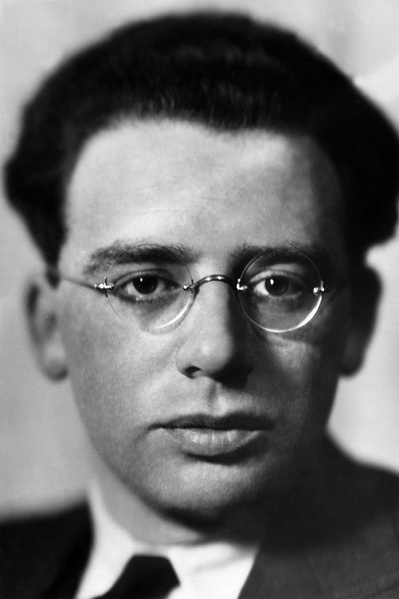


Ernst Ewald Gebert was born on October 19, 1901, in Berlin. He studied at the Academy of Music in Berlin and began his musical career in 1924 as a conductor at the Stadttheater in the Silesian town of Liegnitz (present-day Legnica). In 1926, he moved to the German Theater in Prague as a conductor and répétiteur. He also appeared as a guest conductor at concerts and published concert reviews. In 1929 he began working at the Kroll Opera as a répétiteur, remaining there until the closure of the venue in 1931.
After the Nazis’ rise to power in 1933, he was only allowed to work for Jewish cultural organizations, leading him to become heavily involved with the Berlin Jewish Cultural Federation. There, he conducted concert performances of operas such as Der Barbier von Bagdad and singspiels by Jacques Offenbach and Ditters von Dittersdorf in 1934 and 1935.
In 1937, Gebert left Europe and emigrated to the United States via Cuba, arriving in Miami on December 31, 1937. In the following years, he lived in Chicago and Seattle with his American wife Ella, born Wollenberg, whom he married in February of 1942. In December of 1942, the couple moved to Los Angeles, where he became an American citizen under the name Ernest Gebert on July 27, 1945.
Gebert taught in the opera department at the University of Washington from 1939 to 1943. In 1948, he founded a symphony orchestra in Inglewood, California, which he led until 1960. The composer Erich Wolfgang Korngold, also an émigré from Germany, composed his Theme and Variations, Op. 42. for Gebert’s orchestra. After leaving Inglewood, Gebert founded the Hollywood Symphony Orchestra in 1960.
The musician collapsed during the intermission of a concert on November 21, 1961. Ernst Ewald Gebert died the following day in Hollywood.
1901 Berlin
1961 Hollywood, California