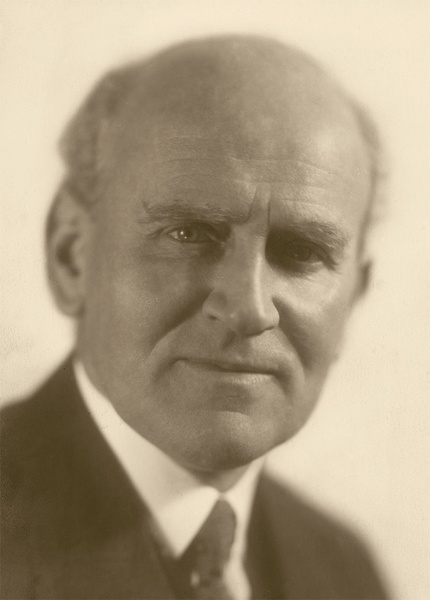


Albert Kehm wurde am 24. März 1881 in Stuttgart geboren. Er erhielt seine Ausbildung zum Schauspieler durch Praktiker wie den Hofschauspieler Wilhelm Göhns, debütierte 1901 am Theater in Bonn und absolvierte seine Lehrjahre an mehr als einem Dutzend Bühnen, zuletzt in Hannover, Bremen und Dresden. 1912 wurde er Regisseur in Königsberg, im folgenden Jahr in Straßburg. Von 1914 bis 1919 leitete er das Stadttheater in Bern. Als man Albert Kehm 1920 als Intendant nach Stuttgart holte, hatte er den Ruf eines versierten Theatermannes. Menschen, die ihn kannten, betonten seine „männliche Noblesse“ und sein „gewinnendes Wesen“.
Kehm hatte einen Blick für Talente: Mit Fritz Wisten, Rudolf Fernau, Mila Kopp und Berta Drews gelang es ihm, hervorragende Darsteller zu engagieren. Ebenso erfolgreich agierte er beim Ensemble der Oper: Spitzenkräfte wie Lydia Kindermann, Hildegard Ranczak oder Willi Domgraf-Fassbaender konnten für einige Jahre nach Stuttgart geholt, oder, wie Hermann Weil, langfristig ans Haus gebunden werden. Auch der Spielplan war alles andere als provinziell, sondern bezeugte Kehms Vorstellung von der eingreifend-aufklärenden Rolle des Theaters. Er wollte, dass „die Werke der Zeitgenossen zum Publikum sprechen“ und dass die darin geäußerten konträren Auffassungen „gegeneinander streiten“. Deshalb standen im Schauspiel Stücke von Georg Kaiser, Carl Sternheim, Frank Wedekind, Franz Werfel, Luigi Pirandello oder Bertolt Brecht und in der Oper Paul Hindemith, Ernst Krenek oder Kurt Weill auf dem Spielplan. Da es ihm gelang, geistesverwandte Oberspielleiter ans Haus zu holen, konnten Ernst Barlach oder Friedrich Wolf fürs Theater entdeckt und Uraufführungen anderer Autoren rasch in Stuttgart nachgespielt werden.
Diese Theaterpolitik stieß früh auf den Widerstand der völkisch-rechtsradikalen Parteien. Der NS-Kurier, die Parteizeitung der Stuttgarter Nationalsozialisten, geiferte im November 1932: „Wenn man aber so wenig Verständnis für deutsche Kunst und eine Spielplangestaltung aus deutschem Geist hat, oder nicht den Mut besitzt, […] entgegen dem jüdisch-marxistischen Klüngel für die Gestaltung eines Spielplans einzutreten, der dem deutschen Empfinden entspricht, […] dann kann man nicht Intendant an einem deutschen Staatstheater sein.“
Doch Kehm ließ sich nicht beirren und wehrte sich offensiv auch gegen die Versuche der Rechtsradikalen im Landtag, Einfluss auf den Spielplan zu gewinnen. Er sei „Zeit seines Lebens ein überzeugter Demokrat gewesen“ und er habe „demokratisches Theater gelebt“, erinnerten sich Zeitzeugen. Diese Haltung erlaubte es ihm, auch mit konservativen Kultusministern Kompromisse zu schließen, und bewahrte ihn davor, 1933 vor den Nazis zu kapitulieren: Als man von ihm den Eintritt in die NSDAP verlangte, lehnte er dies ab. Daraufhin wurde er am 27. März 1933 von Kultusminister Christian Mergenthaler beurlaubt, zum erstmöglichen Zeitpunkt, dem 1. August 1935, gekündigt und in der Zwischenzeit als Theaterleiter nach Freiburg abgeschoben. Im Juni 1935 trat Kehm aus Gesundheitsgründen zurück. 1945 von den Alliierten beauftragt, das Stuttgarter Staatstheaters wiederaufzubauen, gab er den Auftrag wegen interner Streitigkeiten und Einflussnahmen der Besatzungsmacht auf den Spielplan nach einem Jahr zurück. Albert Kehm ist am 24. Juli 1961 in Gräfelfing bei München gestorben.
1881 Stuttgart
1961 Gräfelfing